
PRP Knee Injections: Platelet-Rich Plasma Treatment for Knee Pain
Specialist Orthopaedic and Regenerative Medicine Clinics in Valencia, Alicante and Castellón
✓ Personalised PRP knee injection treatments for selected patients with knee osteoarthritis, patellar chondromalacia and other knee conditions.
✓ Ultrasound-guided platelet-rich plasma injections, with assessment of meniscal injuries, patellar tendinopathy and ligament problems.
✓ Specialist orthopaedic consultations and regenerative medicine treatments across five Regenerat clinics.
Are you considering PRP injections for knee pain? Tell us about your symptoms, previous treatments and any X-rays or MRI scans. Our orthopaedic team can assess whether platelet-rich plasma is suitable for your condition and help you arrange an appointment at your preferred clinic.
Platelet-rich plasma (PRP) knee injections are a treatment made from a concentrated preparation of platelets obtained from your own blood. PRP contains growth factors and other bioactive substances involved in tissue responses. In selected patients, particularly those with mild to moderate knee osteoarthritis, PRP may help reduce pain and improve joint function.
PRP is not appropriate for every knee condition. Its potential benefits depend on the diagnosis, severity of joint damage and individual circumstances. It has not been shown to reliably regenerate lost cartilage or repair every type of knee injury.
PRP Injections for Knee Pain: Are They Right for You?
Are you considering PRP knee injections because pain or stiffness is affecting your daily activities?
Would you like to know how long platelet-rich plasma injections may last and whether the treatment is worth the cost?
Have you been diagnosed with knee osteoarthritis or chondromalacia and want to explore non-surgical treatment options?
Do you have a meniscus tear, patellar tendon injury or persistent knee pain that has not improved with physiotherapy?
Are you concerned about discomfort during the injection, possible side effects or how long recovery may take?
At Regenerat Clínica, our orthopaedic specialists assess whether PRP knee injections are appropriate for your diagnosis, combining regenerative medicine with evidence-informed treatment planning, rehabilitation and individual follow-up.
We begin with a clinical examination and review of any previous imaging, including X-rays, ultrasound or MRI scans where appropriate. Identifying the source of knee pain is essential before recommending an injection.
For selected patients, our team offers ultrasound-guided PRP injections. The lower sections of this page explain applications involving knee osteoarthritis, patellar chondromalacia, meniscal injuries, patellar tendinopathy, ligament injuries and selected cases requiring intraosseous assessment.
Depending on your condition, we may also discuss physiotherapy, strengthening exercises, activity modification or other treatments, including hyaluronic acid injections. PRP does not replace surgery when there is a clear surgical indication.
Although knee injections are a major focus of our work, Regenerat also assesses patients who may benefit from platelet-rich plasma treatment for selected shoulder and hip conditions.
Our specialists welcome patients at our clinics in Catarroja, Torrent, Gandía, Castellón and Elche, serving Valencia, Alicante and Castellón and their surrounding areas.
Book an Appointment
Specialists in infiltrations of Platelet Rich Plasma in Valencia
 I am Miguel Alfonso Porcar , a renowned orthopedic surgeon specialized in regenerative medicine and orthopedic surgery.
In the Regenerat clinic we are referents in the treatment of degenerative pathologies such as knee osteoarthritis, with bioregenerative therapies of plasma rich in platelet growth factors (PRP), to treat many knee, shoulder or hip conditions.
There are different types of growth factors (platelet-derived growth factor PDGF, transforming growth factor Beta, epidermal growth factor EGF……) that stimulate mesenchymal cells to regenerate new tissues.
We use platelet-rich plasma PRP therapy to treat damaged tissue injuries, and help our patients return to their best level of health and function, in many cases avoiding the need for joint surgery or prosthesis placement.
We also use the same orthobiological techniques to accelerate recovery, minimizing complications, increasing the success rate and better results of some trauma surgeries.

English-Speaking Orthopedic Doctor for International Patients
Dr Carlos Mairal, an orthopedic surgeon and trauma specialist in regenerative medicine, provides medical care in English for international patients.
If you are looking for cutting-edge treatment for musculoskeletal injuries, osteoarthritis, or tendinopathies and prefer to communicate in English, Dr Mairal will offer you personalised care in a professional and welcoming environment.
Book your appointment today and receive expert care from an English-speaking orthopedic doctor.
Platelet Origin and Functions: A Focus on Growth Factors
Platelet Origin
Platelets, also known as thrombocytes, are crucial elements of our blood that play a key role in clotting. Platelets originate from giant bone marrow cells called megakaryocytes.
Megakaryocytes are specialized cells responsible for platelet production. Through a process called thrombopoiesis, megakaryocytes fragment into small particles that become platelets.
Cytoplasmic Granules in Platelets
Megakaryocytes, and thus platelets, produce a number of biologically active substances that accumulate in various cytoplasmic granules.
Among these, the alpha granules are of particular interest. The alpha granules of platelets contain a variety of growth factors and proteins that play important roles in platelet function.
When a platelet is activated, these granules fuse with the platelet membrane and release their contents into the bloodstream.
Platelet Growth Factors
Growth factors are proteins that play a crucial role in the regulation of cell growth, proliferation, differentiation and cell function.
In the alpha granules of platelets, several growth factors are found, including platelet-derived growth factor (PDGF), vascular endothelial growth factor (VEGF) and transforming growth factor beta (TGF-β), among others.
It is fascinating to consider that identified, each with its particular role in cell biology.
There are more than 200 growth factors vital to the healing and regenerative processes, and they have driven advances in regenerative medicine, such as the use of Platelet Rich Plasma (PRP).
Growth Factors in Regenerative Medicine
Regenerative medicine has benefited greatly from the knowledge of growth factors. Platelet Rich Plasma (PRP) treatments, for example, harness the power of growth factors to stimulate cellular healing and regeneration and tissue regeneration.
By concentrating these factors in a small amount of plasma, physicians can inject them into areas of damaged tissue to promote faster and more effective healing.
Entre los 200 factores de creimiento cuya función conocemos destacamos:
The Role of Platelet Growth Factors
Platelet growth factors are crucial for a number of biological processes.
They act on target cells by binding to specific receptors on the cell surface, triggering a signaling cascade that can stimulate cell proliferation, differentiation, migration and survival.
Platelet-Derived Growth Factor (PDGF)
PDGF is one of the growth factors vital for smooth muscle cell proliferation and fibroblast growth. It also promotes collagen formation, and plays an important role in wound healing and angiogenesis, which is the formation of new blood vessels from existing ones.
Vascular Endothelial Growth Factor (VEGF)
VEGF is a growth factor that plays an important role in angiogenesis. It stimulates the formation of new blood vessels during wound healing, which ensures that damaged tissues receive sufficient oxygen and nutrients for their reparative process.
Transforming Growth Factor Beta (TGF-β)
TGF-β is a growth factor that has a wide range of functions. P
It promotes cell proliferation and differentiation, extracellular matrix production and has an important role in inflammation and immunity. It also plays a vital role in wound healing and tissue repair.
Inflammation and tissue recovery
The phenomenon of inflammation plays a crucial role in the repair of injured tissues, and it is vital to allow its development. However, it is important to regulate it when its intensity exceeds certain limits.
The tissue recovery cycle comprises several interconnected stages:
- Coagulation.
- Inflammatory phase.
- Proliferation phase.
- Remodeling.
The field of regenerative biology has as its main goals:
- Regulating inflammation.
- Enhancing the proliferation phase, which includes cell activation, generation or formation of extracellular matrix and promotion of angiogenesis.
- Reduce the formation of fibrous tissue.
Knee, shoulder and hip PRP treatment
What is PRP or Platelet Rich Plasma?
PRP is a concentrated serum rich in growth factors, which is extracted from one of the cell types of the fraction or liquid part of our blood: platelets.
What effects can I expect? How does PRP work?
Types of PRP benefits:
- Anti-inflammatory effect: it blocks the production of inflammatory cytokines, while favoring the synthesis of anti-inflammatory cytokines.
- Analgesic effect or pain reduction: it produces an endogenous response that in inflammatory conditions reduces pain.
- Regenerative effect: accelerates the healing of injured tissues (tendons, cartilage, muscles, bones, etc.), stimulating the production of stem cells in areas with chronic or acute injuries, replacing damaged cells and stimulating the production of extracellular matrix, increasing joint and muscle mobility and functionality and reducing recovery time.
The effects of PRP last for 12 months, however, in many cases our patients come back after a year and a half without any discomfort or pain.
What is the treatment: obtaining PRP?
The preparation of the plasma rich or with high concentration of platelet growth factors is performed by the team of professionals of Clínica Regenerat directed by Dr. Miguel Alfonso.
- We obtain a sample by drawing blood from the patient and process it under controlled conditions in a closed system.
- We separate the blood components by centrifugation between 2500 and 5000 revolutions per minute, and select the enriched plasma fraction containing different cell types and a high concentration of platelets.
These platelets contain alpha granules rich in growth factors and cytokines (anti-inflammatory molecules).
- PRP is administered in the area to be treated by means of an infiltration (injection).
This treatment with Platelet Rich Plasma is performed with certified medical devices, specialized and with total guarantee of quality (CE marking).
The blood will be at all times without contact with air or contaminated components, avoiding the transmission of infectious diseases.
Knee plasma infiltration side effects
The knee infiltration treatment with PRP or platelet-rich plasma is as safe as your own blood.
PRP is 100% of the patient’s own and therefore does not produce allergies, disease transmission or rejection.
All devices used during treatment are closed, are used in a sterile environment and are for single use only.
The treatment is performed in the office without the need of an operating room, complying with the safety conditions imposed by the Spanish Agency of Medicines and Health Products (AEMPS).
Applications of PRP treatment in the knee
Several clinical studies have demonstrated the efficacy of PRP application in various knee pathologies, making its use common in:
PRP therapy for the Knee osteoarthritis
Intra-articular autologous PRP injections are more effective than hyaluronic acid injections in reducing pain and restoring joint function, especially in younger patients with knee osteoarthritis up to grade 3.
Due to its anti-inflammatory and analgesic effect, PRP reduces joint stiffness and slows down the progression of joint degeneration.
Tratamiento con PRP para la condromalacia rotuliana
PRP has proven to be an indicated treatment for chondromalacia patella. It produces an improvement of symptoms and can even be curative associated with a weight training program.
It is used in young patients with patellofemoral pain (chondromalacia), as well as in other patients suffering from incipient osteoarthritis to improve their symptoms and prevent their evolution towards severe knee osteoarthritis requiring knee prosthesis.
PRP treatment for advanced osteoarthritis of the knee
Since 2014, there are multiple publications that support as an indicated treatment the intraosseous infiltration of PRP under radiographic control and sedation in patients treated with Ahlbäck grade 3 and 4 osteoarthritis, acting on the synovial membrane, articular cartilage and subchondral bone, reducing pain and improving joint function.
PRP treatment for meniscal lesions
PRP is used in the type of treatment of painful, stable meniscal injury that does not cause knee locks.
Ultrasound-guided infiltration is performed on the focus of the tear in an intrameniscal manner. This creates a stimulus to generate healing, eliminating pain and inflammation in an attempt to avoid an arthroscopic meniscectomy.
In addition, platelet growth factors are used as adjuvants in the surgical treatment of meniscopathy and anterior cruciate ligament tears to enhance healing after repair techniques because the vascularization of the area is scarce.
Studies support the use of PRP to increase the healing rate.
Plasma applications in the knee
Treating ligament injuries
In common knee injuries such as anterior cruciate ligament (ACL) rupture associated with instability, the usual treatment requires surgical repair of the ligament by means of a plasty.
As specialists in knee sprains, we use PRP infiltrations in conjunction with surgery to enhance graft maturation and integration in the knee, improving anteroposterior stability, reducing pain, and minimising postoperative inflammation.
In partial tears or strains (sprains) of the internal lateral ligament, PRP infiltrations accelerate the healing process of the ligament and thus the pain and stability of the joint.
Tendon injuries
Chronic tendinopathies and patellar tendinitis or tendinosis is a frequent and disabling pathology of the knee, which produces an alteration of the tendon fibers.
As specialist in patellar tendonitis we use intra and peritendinous ultrasound-guided PRP infiltrations to generate a new healing of the damaged fibers, improving function and reducing pain .
They can even be used as a treatment for shoulder calcifications—not to eliminate them, but to improve tendon functionality.
It is important to combine it with a weight training program with eccentric exercises.
Intraosseous edema
Bone injuries in the knee classified as trabecular fractures, stress fractures or intraosseous edema have a slow evolution.
It is advisable to perform an intraosseous PRP infiltration therapy under sedation and radiographic control in the focus of the bone edema or trabecular fracture and accelerating the healing process.
Other PRP applications
PRP infiltrations for epicondylitis
Epicondyle tendinopathy or tennis elbow is a very prevalent pathology caused by repetitive movements. It causes an important stress of the extensor musculature in the elbow and that has as consequence the lesion of the tendons at the level of the epicondyle.
Corticosteroid infiltration for the treatment of tennis elbow, while providing immediate pain relief, can be counterproductive and may lead to tendon rupture in the short term.
Together with appropriate physiotherapy, studies show that minimally invasive PRP therapy offers good results in terms of tendon regeneration.
Ultrasound is a technique that will help us in its diagnosis and definitive treatment, performing ultrasound-guided PRP infiltration in the area of the enthesitis or tendon rupture.
Hip tendinitis, Achilles tendinitis.
Earlier recovery has been observed with the application of PRP both in a surgical repair of a complete Achilles tendon rupture, as well as by intratendon ultrasound-guided infiltration in tendinosis and Achilles tendonitis.
It has also been shown to be very effective in the treatment of hip tendinitis symptoms.
Plantar fasciitis infiltrations
This biological therapy induces the healing mechanisms, and it is the best treatment to reduce and prevent heel pain caused by fascia injury.
Knee Plasma Infiltration Opinions

Añadir a mi comentario que estoy muy contenta con el tratamiento de PRP que me está haciendo la Doctora Cristina Sánchez es encantadora, muy atenta y comprensivas! De momento loes resultados de la infiltración están siendo muy buenos! Gracias a todos el personal 😍😘 

See more platelet-rich plasma testimonials.
Elite athletes and sports professionals trust in the traumatologists of Regenerat clinic for their recovery! Join them


Frequently Asked Questions About PRP Knee Injections
Are PRP knee injections worth it?
PRP knee injections may be worth considering for selected patients with mild to moderate knee osteoarthritis, particularly when exercise, physiotherapy and other conservative treatments have not provided sufficient relief.
PRP does not reliably regenerate worn cartilage or guarantee that knee replacement surgery can be avoided. A specialist assessment can help you weigh the potential benefits, limitations and costs.
How long do PRP injections last in the knee?
The benefits of PRP knee injections may last approximately 12 months in some patients with knee osteoarthritis. Factors such as the severity of osteoarthritis, age, activity level and individual response can influence the duration of relief.
Improvements usually develop gradually over several weeks rather than immediately after treatment.
Can I walk after a PRP injection in my knee?
Yes, most patients can walk carefully after a standard PRP knee injection, although temporary discomfort or swelling may occur.
Your specialist may recommend avoiding prolonged walking, strenuous exercise, running and high-impact activities during the first 24 to 48 hours.
Recovery recommendations depend on the specific condition being treated and whether PRP is injected into the joint, a tendon or another structure.
What is the cost of PRP treatment for the knee?
At Regenerat Clínica, the published price for a single ultrasound-guided PRP injection is €290, while infiltration in several areas is listed at €370.
The total cost depends on the number of sessions required and the individual treatment plan.
Our orthopaedic specialists will assess your knee condition and explain the recommended treatment, number of injections and applicable costs before proceeding.
What is the success rate of PRP treatment for knee osteoarthritis?
There is no universally established success rate for PRP knee injections because clinical studies use different preparations, treatment protocols and criteria for measuring improvement.
Patients with mild to moderate knee osteoarthritis experience meaningful reductions in pain and improvements in mobility.
At Regenerat Clínica, we assess each patient’s clinical condition, imaging findings and previous treatments before recommending platelet-rich plasma injections.
How long is the recovery time after a PRP knee injection?
Recovery after a standard intra-articular PRP knee injection is generally relatively short.
Temporary soreness, swelling or stiffness may occur during the first few days. Many patients can resume light daily activities shortly after treatment, although strenuous exercise should initially be avoided.
The recovery period may be longer when PRP is used for tendon or meniscal injuries. Improvements in knee pain and function may take several weeks to develop.
Where can I get PRP knee injections near me?
Regenerat Clínica offers specialist assessments for PRP knee injections at five clinics in Catarroja, Torrent, Gandía, Castellón and Elche.
We also welcome patients from surrounding areas, including Dénia, Jávea, Torrevieja, Vila-real, Burriana, Aldaia and Alaquàs.
Our orthopaedic specialists provide personalised assessments to determine whether ultrasound-guided platelet-rich plasma injections are suitable for your knee condition.
To arrange an appointment, call +34 961 146 834 or contact us via WhatsApp on +34 628 112 820.
Are PRP injections in the knee painful?
PRP knee injections may cause mild discomfort during the procedure, although pain levels vary between patients.
At Regenerat Clínica, ultrasound guidance helps our specialists position the needle accurately. Local anaesthesia or other comfort measures may be considered when clinically appropriate.
Temporary soreness, swelling or a sensation of pressure may occur afterwards, usually improving within a few days.
What are the side effects of PRP knee injections?
The most common side effects of PRP knee injections include temporary pain, swelling, stiffness and occasional bruising around the injection site.
Because platelet-rich plasma is prepared from the patient’s own blood, the risk of allergic reactions to the injected plasma is low. However, the procedure is not completely risk-free.
Less common complications include infection, bleeding and injury to surrounding structures.
Contact a medical professional promptly if you experience fever, increasing redness, severe pain or significant swelling after treatment.
Can PRP injections help a knee meniscus tear?
PRP injections may be considered in selected patients with meniscal injuries, particularly when symptoms persist despite appropriate conservative treatment.
Treatment suitability depends on the location and type of tear, associated knee injuries, symptoms and MRI findings.
At Regenerat Clínica, our orthopaedic specialists evaluate each case to determine whether PRP, rehabilitation or another treatment approach is appropriate.
How many PRP injections are needed for knee pain?
The number of PRP knee injections depends on the underlying diagnosis, severity of symptoms and individual response.
Some patients may receive a single injection, while others may be offered a series of up to three injections, often spaced approximately one month apart.
There is no universally established treatment schedule suitable for every patient.
At Regenerat Clínica, our specialists recommend an individualised treatment plan based on clinical assessment and the available scientific evidence.
Price of PRP Infiltrations in the Knee, Hip, Shoulder…
The price of each infiltration using ultrasound to inject the platelet-rich plasma in the exact spot of the lesion is 290 Euros. Infiltration in several areas 370 €.
These infiltrations are performed with the application of cold and local anesthesia to avoid any type of discomfort during the procedure.
The number of procedures to be performed on each patient depends on the extent of the lesion.
In some cases a single dose is sufficient, and up to 3 doses may be necessary with a separation of 1 month between them.
We finance your treatments in a fast and secure way.
If you wish, we offer immediate financing up to 1000 € interest free.
PRP Knee Injections in Valencia, Castellón and Alicante
Specialists in Ultrasound-Guided Platelet-Rich Plasma Treatment for Knee Pain and Osteoarthritis
At Regenerat Clínica, we offer specialist orthopaedic assessments for patients considering PRP knee injections to manage persistent knee pain. Platelet-rich plasma may be considered for selected patients with knee osteoarthritis, particularly in mild to moderate cases. Our specialists also assess chondromalacia, meniscal injuries and patellar tendinopathy, although the evidence supporting PRP varies between these conditions.
Our approach combines personalised diagnosis with regenerative medicine and established conservative treatments. Following a clinical examination and review of diagnostic imaging, we assess the potential role of ultrasound-guided PRP injections, rehabilitation and other appropriate options. Treatment recommendations take account of your symptoms, previous therapies, functional limitations and expectations.
Regenerat provides consultations at five clinics in Catarroja, Torrent, Gandía, Castellón and Elche. We also welcome patients from Aldaia, Alaquàs, Dénia, Jávea, Vila-real, Burriana and Torrevieja who are looking for specialist advice about PRP injections for knee pain. Our team can help you choose the most convenient location for your assessment.

At our Catarroja orthopaedic clinic for PRP knee injections, we assess patients with knee osteoarthritis, persistent joint pain and selected sports injuries. Our specialists evaluate whether ultrasound-guided platelet-rich plasma treatment may help improve pain and function as part of a personalised treatment plan.
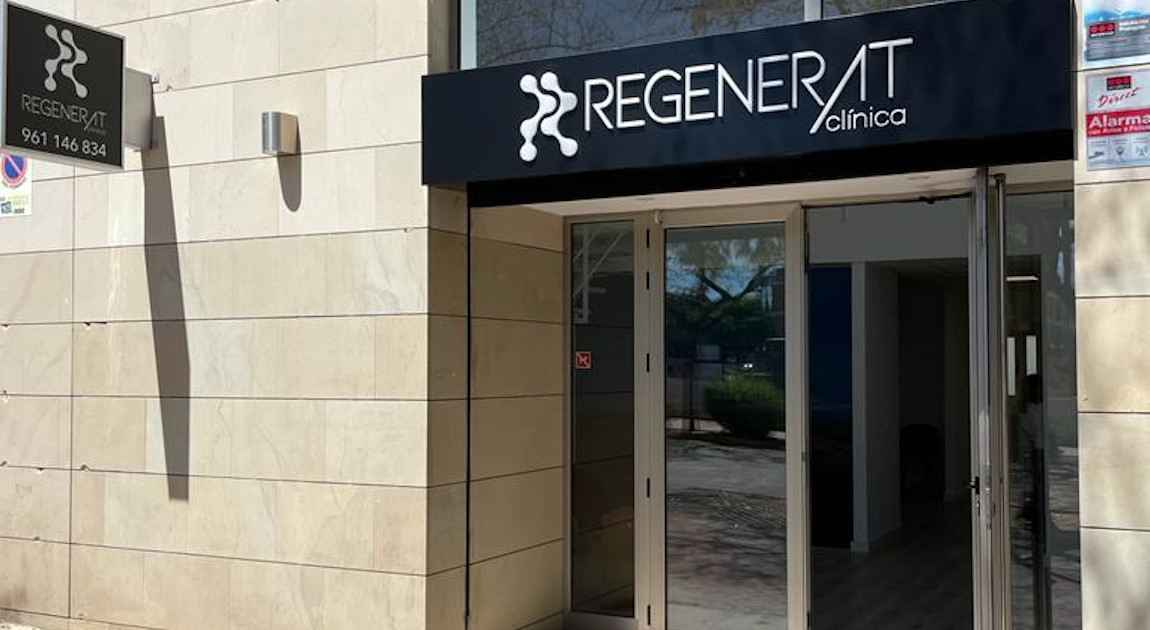
Patients experiencing knee pain can visit our Torrent clinic for platelet-rich plasma knee treatment. We assess knee osteoarthritis, chondromalacia and selected tendon or meniscal problems. We also welcome patients from Aldaia and Alaquàs seeking specialist advice about PRP injections and non-surgical knee pain management.

Our Gandía clinic for ultrasound-guided PRP knee injections provides personalised assessments for knee osteoarthritis and selected musculoskeletal injuries. We also welcome patients seeking PRP knee treatment assessments from Dénia and Jávea, helping them explore appropriate regenerative medicine and rehabilitation options.

At our Castellón orthopaedic centre specialising in PRP injections, we assess knee osteoarthritis, chronic joint pain and selected tendon conditions. Patients from nearby towns can also arrange platelet-rich plasma knee assessments for Vila-real residents or request specialist PRP knee pain consultations for patients from Burriana.
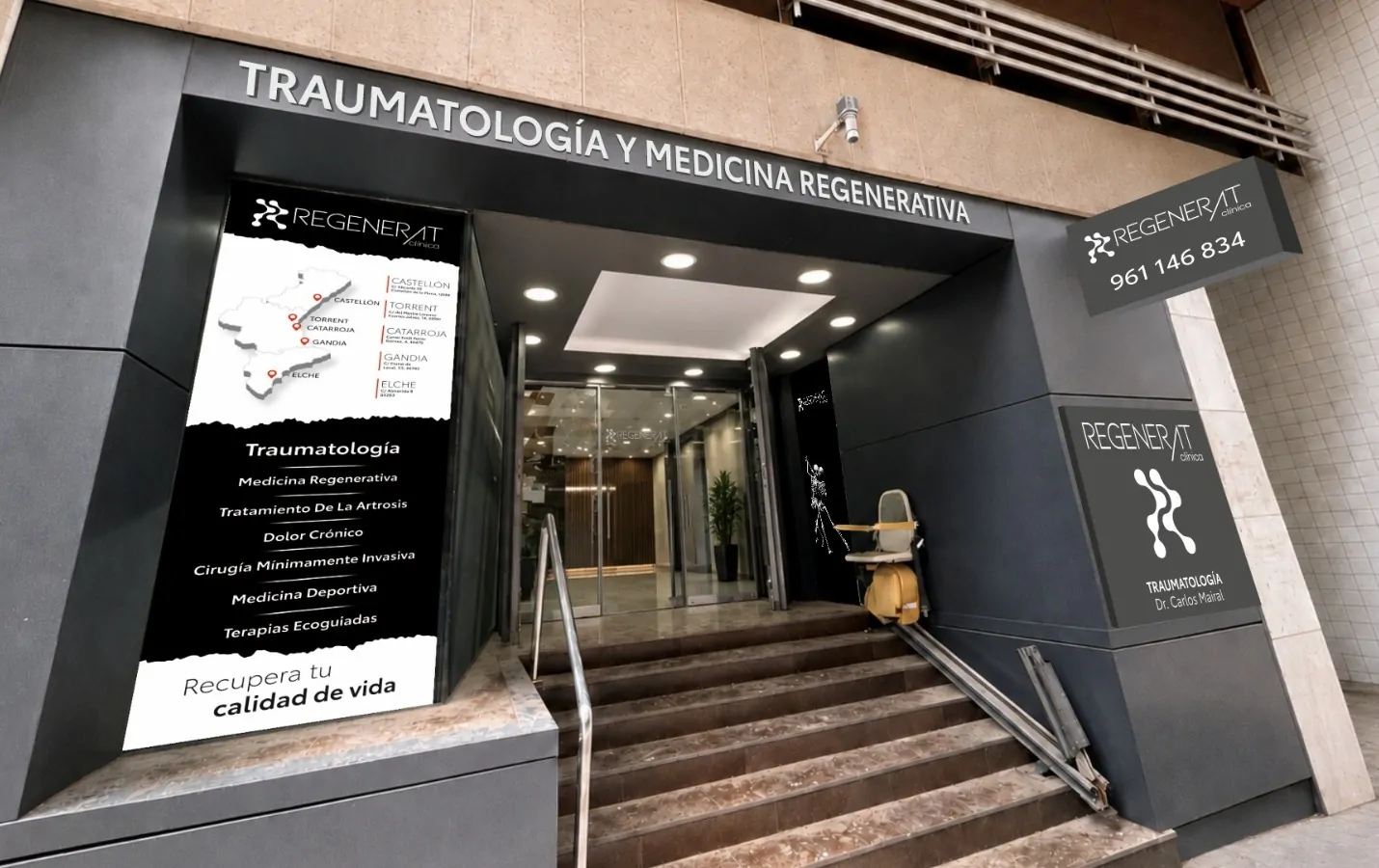
Our Elche clinic for PRP knee pain treatment offers specialist assessment for patients with osteoarthritis, knee stiffness and selected injuries. We also welcome those looking for orthopaedic advice on PRP knee injections near Torrevieja, with treatment recommendations based on their diagnosis and individual needs.
Book Your PRP Knee Injection Assessment at Regenerat Clínica
Are you experiencing persistent knee pain, stiffness, swelling or difficulty walking? Our orthopaedic specialists assess knee osteoarthritis, chondromalacia, selected meniscal injuries and tendon conditions to determine whether platelet-rich plasma injections could be appropriate.
Depending on your diagnosis, we may recommend ultrasound-guided PRP treatment, rehabilitation or alternative approaches.
Contact us with details of your symptoms, any previous treatment and available X-rays, ultrasound reports or MRI scans. Tell us whether you prefer Catarroja, Torrent, Gandía, Castellón or Elche, and our team will help you arrange a specialist consultation. You can also ask about the cost of PRP knee injections and the number of sessions that may be recommended.
Regenerat clinic: III Wellness and Quality of Life Awards
Reference Center in Regenerative Therapies
The headquarters of the newspaper La Razón in Madrid hosted the gala ceremony of the third edition of the Wellness and Quality of Life Awards,
These awards recognize the work of companies and professionals who help to improve people’s lives.
The effort to change or improve aspects of our society is a task that requires dedication, creativity and innovation on the part of professionals and companies.
Today we celebrate the 3rd edition of the #WellnessQualityAwardsLR to reward and recognize them for it.
Regenerat clinica receives the “Center of reference in regenerative therapies” award.
Contact information
☎ 961 146 834
info@regeneratclinica.com
Schedule
Mornings – 9:30am – 14:00pm
Afternoons – 16:00pm – 20:00pm
Saturday & Sunday – Closed
Clínic in Catarroja
Traumatólogo en Catarroja en Carrer Emili Ferrer Gómez, 4, 46470 Catarroja
Clínic in Torrente
Traumatólogo en Torrente en C/ del Mestre Lorenzo Fuertes Julvez, 14, 46901, Torrente
Clínic in Gandía
Traumatólogo en Gandía C/ Ciutat de Laval, 23, 46702 Gandia, Valencia
Clínic in Castellón
Traumatólogo en Castellón Carrer d’Alacant, 39, 12004 Castelló de la Plana
Clínic in Elche
Traumatólogo en Elche C/ Almòrida, 8, 03203 Elx, Alicante

